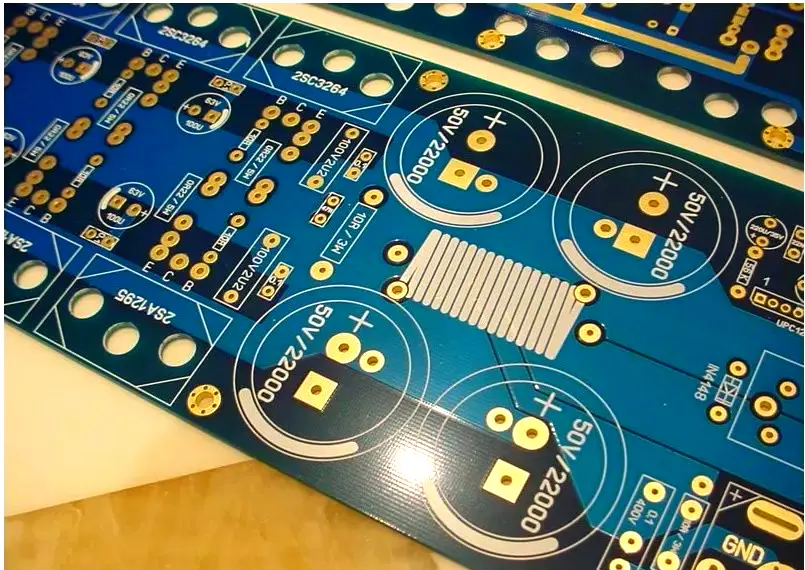
1. Introduction:
Core Position of Electroless Copper Plating Process and Activation Solution The electroless copper plating process (also known as chemical copper plating) is a critical step in PCB through-hole interconnection. It deposits a uniform copper layer on the suRFace of non-conductive hole wall substrates (e.g., FR4 epoxy resin) via chemical reactions, providing a "conductive base" for subsequent electroplating. The **activation solution (with palladium salt as the core component, such as PdCl₂)** plays a key role in forming "catalytic active centers" (palladium particles) on the hole wall surface: these particles adsorb copper ions in the electroless copper plating solution, triggering the reduction of copper ions to metallic copper for deposition, and ultimately forming a copper plating layer tightly bonded to the hole wall.
Hole wall plating adhesion strength is a core quality indicator of the electroless copper process. Insufficient adhesion can lead to plating peeling, through-hole open circuits, and other failures during subsequent Pcb Assembly or use. The palladium salt concentration directly determines the quantity, distribution, and stability of catalytic active centers, making it a critical variable affecting adhesion. The essence of hole wall plating adhesion lies in the "physical adsorption and chemical bonding formed between the copper plating, hole wall substrate, and catalytic layer." Its strength fully depends on the quality of the catalytic layer formed by palladium salt:
- Physical Adsorption: Uniformly distributed palladium particles form an "anchoring effect" with the micro-pores of the hole wall epoxy resin. The subsequent copper plating deposits on the surface of palladium particles, equivalent to "binding" to the hole wall through palladium particles, enhancing mechanical adhesion.
- Chemical Bonding: As a catalyst, palladium particles promote the directional reduction of copper ions on the hole wall surface, forming chemical bonds such as Pd-Cu metallic bonds and polar bonds between Pd and epoxy resin, strengthening chemical adhesion.
Abnormal palladium salt concentrations cause issues like "insufficient quantity, uneven distribution, and agglomeration failure" in the catalytic layer, directly damaging physical adsorption and chemical bonding, and reducing adhesion.
In the electroless copper process, the conventional control range of palladium salt concentration is 10-30ppm (mg/L), and the impact on adhesion varies significantly across different concentration ranges:
- Catalytic Layer Defects:
At low palladium salt concentrations, the number of adsorbed palladium particles on the hole wall surface is insufficient (density <10⁵ particles/mm²) and distributed unevenly (no palladium particles in local areas), forming a "discontinuous catalytic layer" with no active centers in some regions. - Impact on Adhesion:
- Non-catalytic areas: During electroless copper plating, copper ions cannot be reduced in areas without palladium particles, leading to "missing plating" (local copper-free areas on the hole wall) or "suspended plating" (copper layer only covers edges), with adhesion approaching zero (peeling under slight external force).
- Low-catalytic areas: Sparse palladium particles result in insufficient "anchoring points" between the copper plating and hole wall. Adhesion is only 30%-50% of the qualified value (e.g., qualified adhesion ≥0.8kg/cm, actual measurement 0.2-0.4kg/cm). After thermal shock testing (260℃×10s), the plating peeling rate exceeds 40%.
- Typical Defects: Cross-sectional observation of PCB through-holes reveals "local missing plating" and "gaps between the hole wall and plating." Subsequent electroplating easily causes "plating blistering."
- Catalytic Layer Characteristics:
Within this concentration range, the adsorption of palladium salt on the hole wall is moderate (palladium particle density 10⁵-10⁶ particles/mm²). With the aid of a "colloidal palladium activation solution" (containing stabilizers such as hydrochloric acid and ammonium chloride), palladium particles are uniformly dispersed (particle size 20-50nm, no agglomeration), forming a "continuous, dense catalytic layer." - Impact on Adhesion:
- Physical bonding: Palladium particles fully embed into the micro-pores of the hole wall (FR4 hole walls have 0.5-1μm pores after roughening). After copper plating deposition, an "interlocking structure" forms with the hole wall, achieving mechanical adhesion ≥0.8kg/cm.
- Chemical bonding: Palladium particles exhibit stable catalytic efficiency, and copper ions are directionally reduced into a "columnar crystal copper layer" (grain size 50-100nm). Chemical bonds between copper-palladium-substrate are intact, accounting for over 60% of total adhesion.
- Stability: After thermal shock (260℃×10s) and thermal cycling (-40℃~125℃, 100 cycles), the plating peeling rate is ≤5%, fully meeting IPC-6012 standards for PCB through-hole adhesion (Class 2 and above).
- Process Advantages: This concentration range balances cost and efficiency—palladium salt consumption is moderate (treating 100-150 PCBs per liter of activation solution) without subsequent bath contamination caused by excessive palladium salt.
- Catalytic Layer Defects:
At high palladium salt concentrations, excessive adsorption of palladium particles on the hole wall surface easily causes "agglomeration" (particle size >100nm, forming bulk aggregates). Excess palladium salt also leaves "free palladium ion residues" (unadsorbed Pd²+) on the hole wall surface. - Impact on Adhesion:
- Uneven adhesion due to agglomeration: In areas with agglomerated palladium particles, copper plating grows rapidly preferentially on aggregate surfaces, forming "local thick copper layers." However, the adhesion of aggregates to the hole wall is weak (1/10 of a single palladium particle), so thick copper layers easily peel off with aggregates, resulting in local adhesion ≤0.3kg/cm.
- Plating defects caused by free palladium ions: Free Pd²+ carried into the subsequent electroless copper bath forms "heterogeneous catalytic centers" in the plating solution, leading to "pinholes" and "porosity" in the copper plating (grain size >200nm, increased porosity). The overall compactness of the plating decreases, and adhesion is 20%-30% lower than at suitable concentrations.
- Cost and contamination: Palladium salt is expensive (approximately 500 RMB/g), so high concentrations increase costs by over 40%. Excess palladium ions also contaminate the copper plating bath, shortening its service life (from 10 days to 5 days).
- Typical Defects: The surface of PCB through-hole plating is rough. Cross-sectional observation shows "internal pinholes in the plating" and "local separation between the plating and hole wall," easily causing "cold soldering" during subsequent welding (due to poor thermal conductivity from porous plating).
The impact of palladium salt concentration on adhesion must be combined with other activation process parameters. Adjusting concentration alone cannot ensure qualified adhesion. Core associated parameters include:
- At 10-30ppm concentration: Insufficient activation time (<3 minutes) leads to inadequate palladium particle adsorption and discontinuous catalytic layers, reducing adhesion by 30%.
- Excessive time (>5 minutes): Even at suitable concentrations, excess palladium particles still agglomerate, reducing adhesion by 10%-15%.
- Low temperature (<25℃): Slower palladium salt adsorption rate reduces palladium particle density by 20% at the same concentration, resulting in insufficient adhesion.
- High temperature (>35℃): Decreased stability of palladium salt causes decomposition into metallic palladium precipitates (inactive), rendering the catalytic layer ineffective and adhesion nearly zero.
- pH <1.5: Strong acid corrodes the hole wall epoxy resin, damaging micro-pores and preventing palladium particle anchoring, reducing adhesion by 40%.
- pH >2.5: Palladium salt easily forms palladium hydroxide (Pd(OH)₂) precipitates, losing catalytic activity. The catalytic layer fails, and the plating peels off completely.
- Detection Frequency: Measure the palladium salt concentration in the activation solution every 2 hours using an "atomic absorption spectrometer" or "colorimetric method" to ensure it remains within 10-30ppm.
- Supplementation Rule: When the concentration drops below 15ppm, add PdCl₂ at a ratio of "0.1g PdCl₂ per liter of activation solution increases concentration by 10ppm" to avoid sudden concentration fluctuations.
- Peel Test: Apply axial tension to the hole wall using a force gauge, measuring the maximum force at plating peeling. The qualified standard is ≥0.8kg/cm (IPC-6012 Class 2).
- Thermal Shock Test: Immerse the PCB in 260℃ molten solder for 10 seconds, then observe the hole wall plating after cooling. No peeling or blistering is considered qualified.
- Cross-Sectional Microscopic Observation: Use a metallographic microscope to observe the through-hole cross-section. The plating must continuously cover the hole wall without gaps or missing areas, with uniform thickness (5-8μm).
- Cause: Ignoring the negative effects of palladium particle agglomeration and free ions.
- Mitigation: Strictly control concentration within 10-30ppm; do not blindly increase concentration. Aim for a "continuous, non-agglomerated catalytic layer."
- Cause: Abnormal temperature/pH renders palladium salt inactive even at suitable concentrations.
- Mitigation: Simultaneously monitor temperature (25-35℃), pH (1.5-2.5), and concentration as part of process control; record values every hour.
- Cause: Residual free palladium ions contaminate the copper plating bath, causing plating defects.
- Mitigation: After activation, clean with deionized water 2-3 times (1-2 minutes each) to remove residual free palladium salt from the hole wall.
In the electroless copper plating process, the impact of palladium salt concentration on hole wall plating adhesion follows the principle of "balanced catalysis"—sufficient palladium particles are required to form a continuous catalytic layer, while excess must be avoided to prevent agglomeration and contamination. In practical processes, "10-30ppm concentration" serves as the foundation, combined with synergistic control of activation time, temperature, and pH. Regular detection and adhesion verification ensure optimal catalytic layer quality, ultimately achieving stable and qualified plating adhesion (≥0.8kg/cm) and laying the groundwork for the electrical interconnection and mechanical reliability of PCB through-holes.

 PCB
PCB FPC
FPC Rigid-Flex
 FR-4
FR-4 HDI PCB
 Rogers High-Frequency Board
 PTFE Teflon High-Frequency Board
 Aluminum
 Copper Core
 PCB Assembly
 LED light PCBA
 Memory PCBA
 Power Supply PCBA
 New Energey PCBA
 Communication PCBA
 Industrial Control PCBA
 Medical Equipment PCBA
 Testing Service
 PCBA Testing Service
 Certification Application
 RoHS Certification Application
 REACH Certification Application
 CE Certification Application
 FCC Certification Application
 CQC Certification Application
 UL Certification Application
 Transformers, Inductors
 High Frequency Transformers
 Low Frequency Transformers
 High Power Transformers
 Conversion Transformers
 Sealed Transformers
 Ring Transformers
 Inductors
 Wires,Cables Customized
 Network Cables
 Power Cords
 Antenna Cables
 Coaxial Cables
 Net Position Indicator
 Solar AIS net position indicator
 Capacitors
 Connectors
 Diodes
 Embedded Processors & Controllers
 Digital Signal Processors (DSP/DSC)
 Microcontrollers (MCU/MPU/SOC)
 Programmable Logic Device(CPLD/FPGA)
 Communication Modules/IoT
 Resistors
 Through Hole Resistors
 Resistor Networks, Arrays
 Potentiometers,Variable Resistors
 Aluminum Case,Porcelain Tube Resistance
 Current Sense Resistors,Shunt Resistors
 Switches
 Transistors
 Power Modules
 Isolated Power Modules
 AC-DC Power Modules
 DC-AC Module(Inverter)
 RF and Wireless